When Winter Meets 35 Degrees
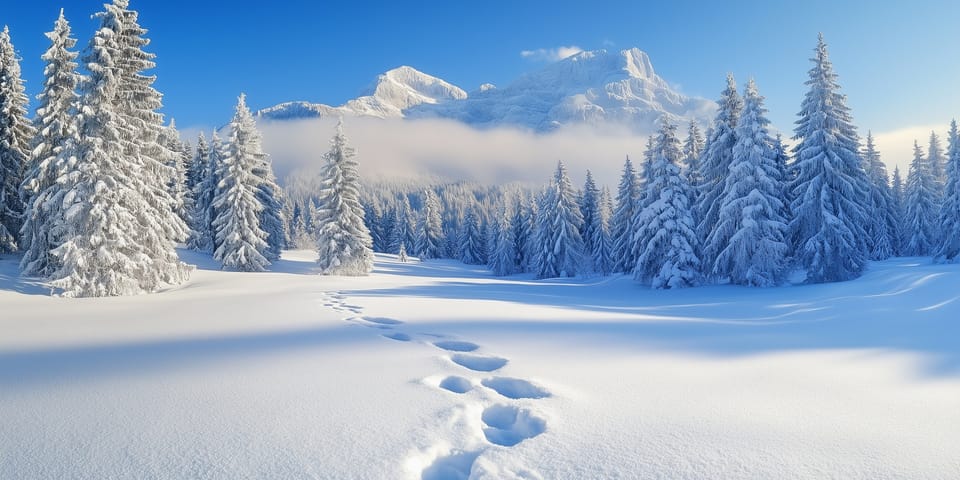
A story about climate, culture and learning to see the sun differently.
The first time Chinonso saw photos of Norwegian winter, he paused.
There is a particular kind of silence that comes with snow.
It is not just cold.
It is not just white.
It is a softness that settles over everything — sound included.
I was not born into this silence.
I grew up in Belgium, but Norway was always part of my childhood —
a place my parents returned to again and again,
a landscape that felt wider and quieter than everyday life.
Ten years ago, I chose to live here.
Chinonso has never stood in snow like this.
He grew up where the air carries warmth almost every day of the year.
Where 35 degrees is not an exception, but a rhythm.
Where light rises from red earth and sunlit streets.
When I send him photos of winter — frozen lakes, pale skies, trees buried in white —
he studies them carefully.
And once he said something I will never forget:
“There is light in the freezer.”
And somehow, that is exactly what it looks like.
Snow slows everything down.
It absorbs sound.
It teaches patience.
But warmth does something else.
Warmth opens windows.
It invites you outside.
It makes conversations longer.
Through him, I have started to feel the sun differently.
Not as something rare and fragile —
but as something generous.
Nigeria would be too hot for me.
Norwegian winters would feel too long for him.
So somewhere between frost and 35 degrees,
we are choosing a middle ground.
Not as an escape.
Not as an impulse.
But as a climate we can both live in.
Sometimes culture is not only in language or tradition.
Sometimes it is in temperature.
In how your body reacts.
In what feels normal.
In what feels like home.
When winter meets 35 degrees,
it is not just weather that changes.
It is direction.
Member discussion